
The University of Queensland is committed to fostering and rewarding a positive research culture that upholds the highest standards of integrity, inclusivity, collaboration and innovation in the way our research is conducted, managed and communicated. The UQ Research Culture Awards celebrate the professional and academic staff, across disciplines and career stages, who are making exceptional contributions to enriching our research environment. These awards seek to inspire and encourage a shared commitment to advancing a sustainable and thriving research ecosystem that supports the growth of individuals and teams, empowering them to reach their full potential.
Congratulations to our 2026 UQ Research Culture Award recipients.
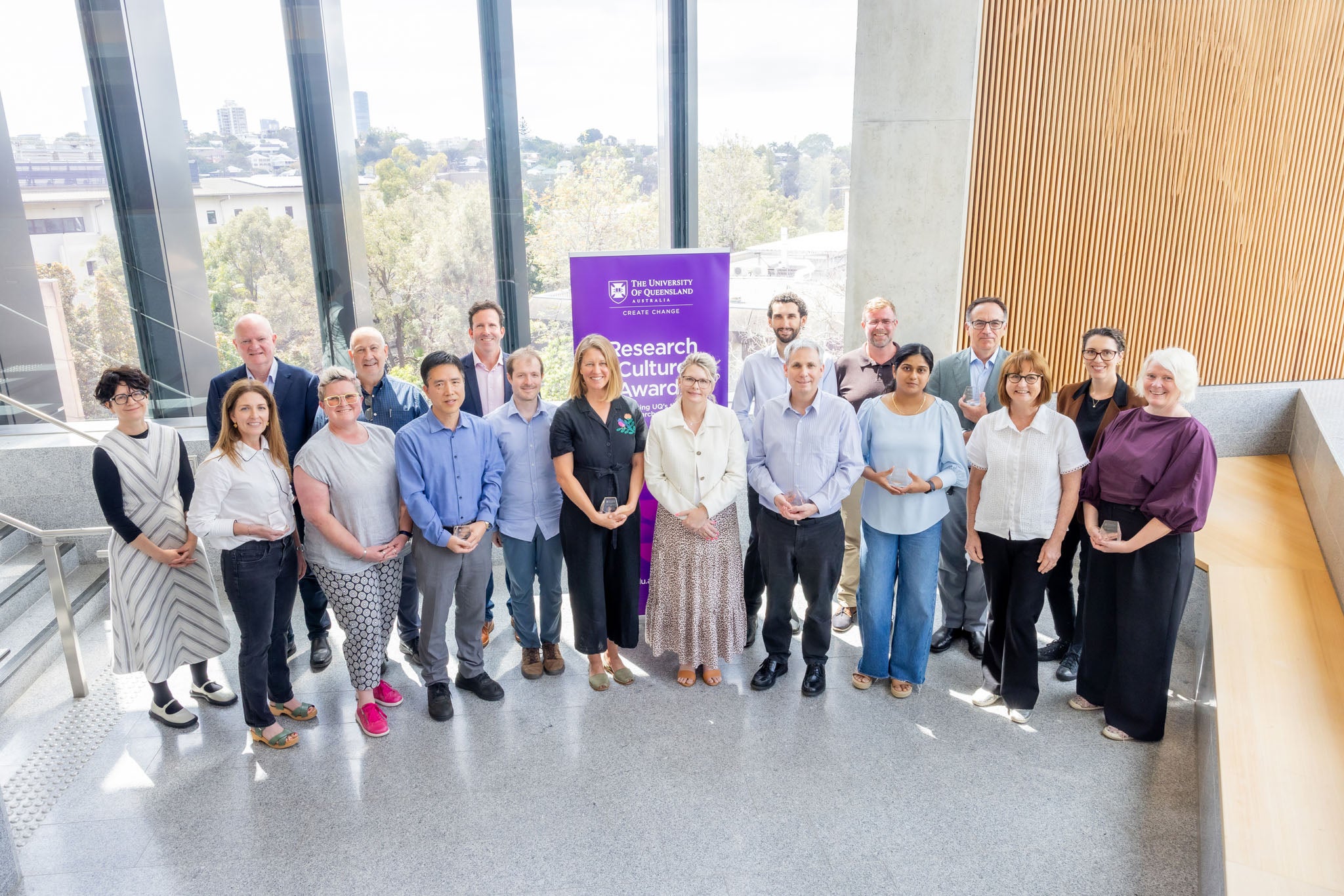
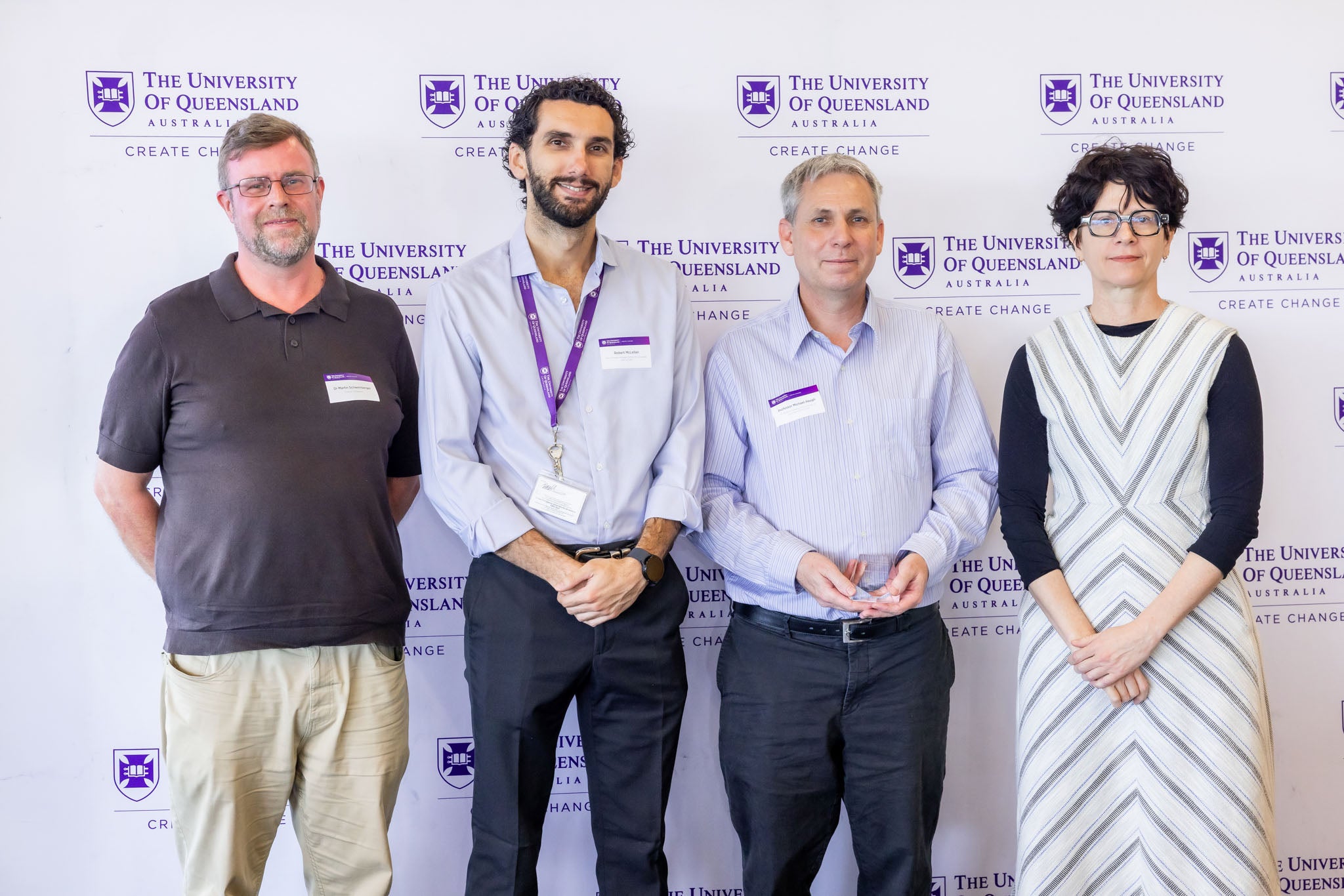
UQ Research Culture Awards 2026 award recipients with Professor Rachel Parker, Pro-Vice-Chancellor (Research) and Professor Paul Bonnington, Pro-Vice-Chancellor (Research Infrastructure)
Advancing Inclusive Research Environments
Centre for Biodiversity and Conservation Science Management Committee School of the Environment
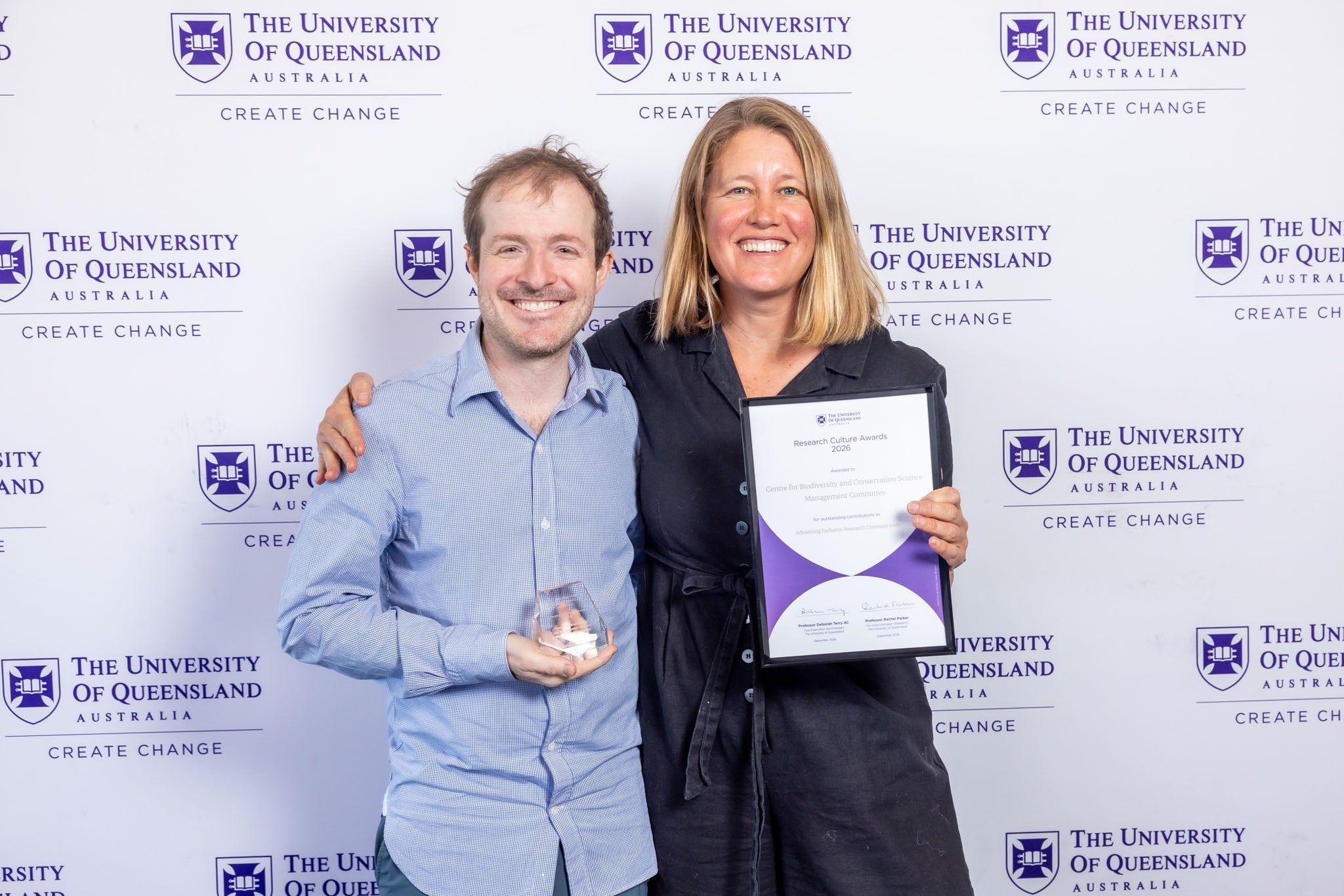
The CBCS Management Committee’s bottom-up approach to governance has equitably redistributed leadership, participation and access to opportunity, shifting from a director-led structure to a co-designed, community-driven system embedding inclusion within research practice. Leadership has moved to a genuinely distributed structure comprising mid- and early-career Deputy Directors and strong representation of ECRs and HDR students, leading to a more inclusive, participatory and globally engaged research culture with substantial and enduring impact.
Innovative Research Engagement
HERA 2.0 Champions UQ Research Office
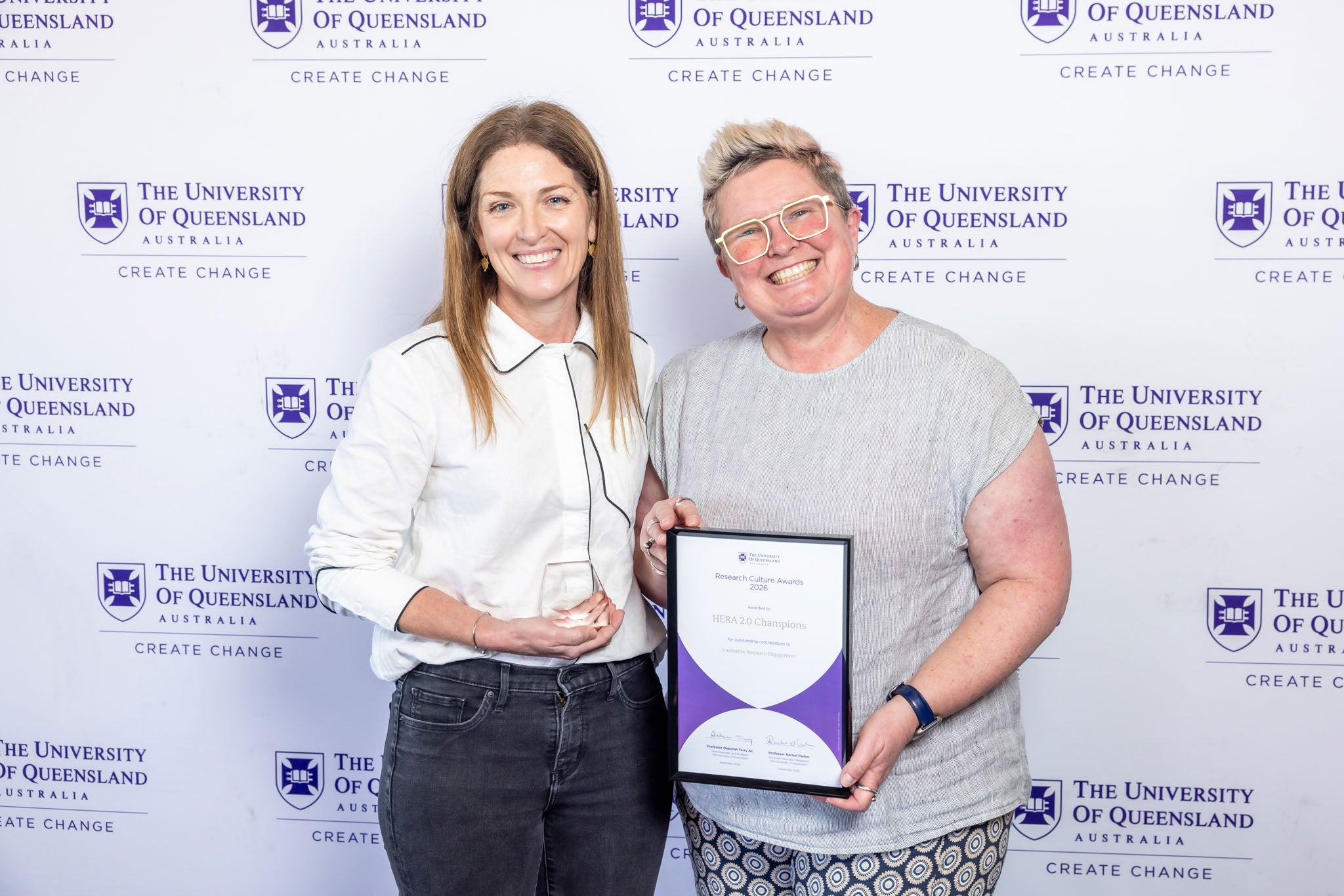
Through their strong support of HERA 2.0, this team has enabled a deliberately collaborative model for mission-driven health research at UQ, helping to translate HERA’s strategic investment into active research ecosystems, new collaborative teams and stronger pathways toward large-scale funding and health system impact. Their work has connected researchers, community voices, system partners and funders through initiatives such as HERA Collaborate, the Disability Research Accelerator pathway and the Through Our Eyes: Partnering for Change event.
Partnering for the UN Sustainable Development Goals (SDGs)
Dr Zyta Ziora Institute for Molecular Bioscience
Through her research focused on antimicrobial resistance, Zyta has developed partnerships and initiatives to advance multiple UN SDGs and foster many international research and training partnerships (India, Pakistan, Thailand, Indonesia, Malaysia, Germany and Poland). Her industry-linked research is working to repurpose agricultural waste and Australian flora for food preservation and water decontamination, while her STEM outreach and reconciliation activities promote gender equity, inclusion and global partnerships.
Research Management and Support
Lauren Gates UQ Research Office
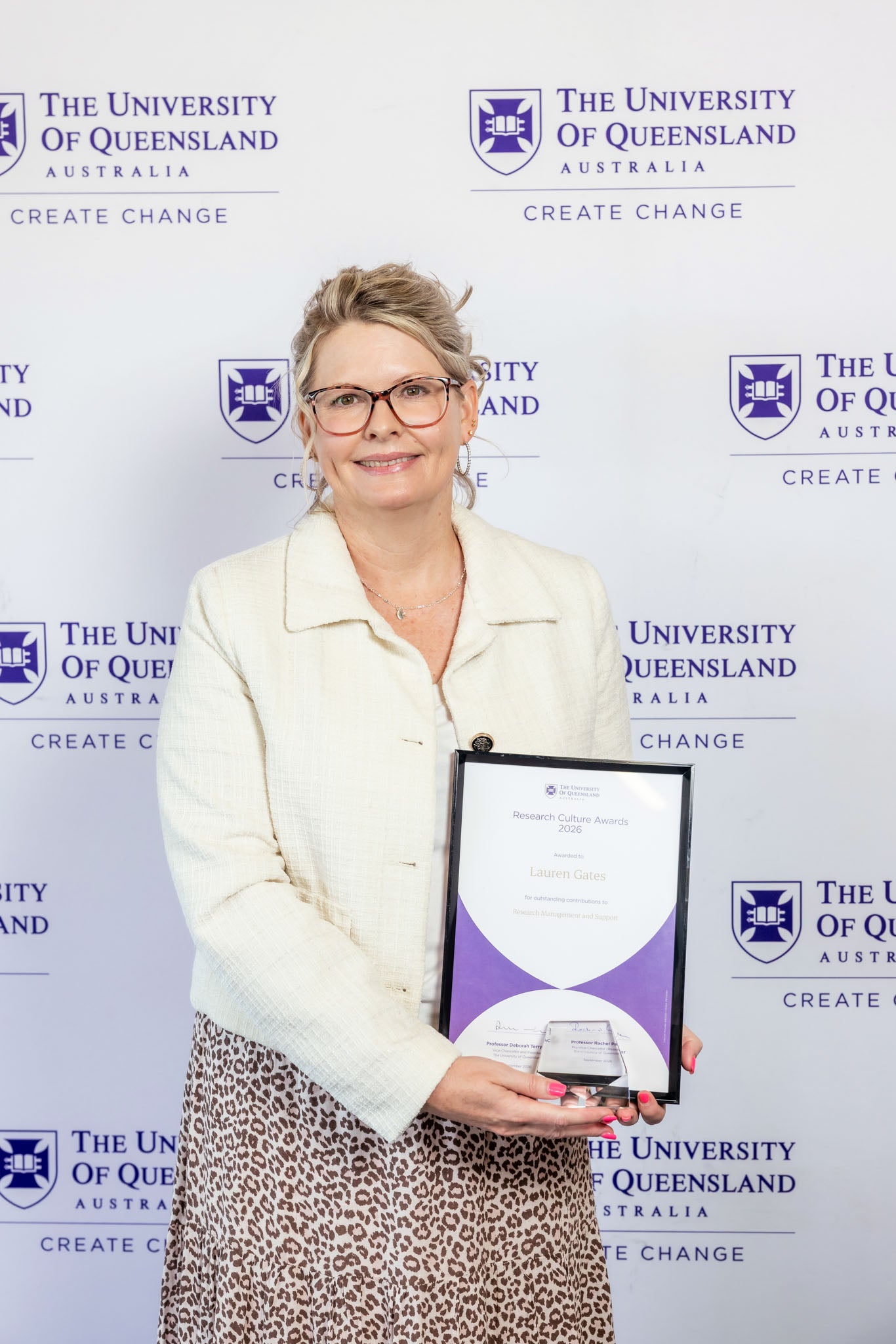
Lauren has provided exceptional leadership of the Contracts and Consultancy Management Office, one of UQ's highest-volume research support functions, through a period of significant organisational and system change, including implementation of UQ's new Research Commercial Management model and adoption of MyResearch, all while maintaining high levels of service delivery. Through innovation, collaboration and capability development, Lauren has significantly strengthened research support, governance and service delivery across UQ.
Kai-Yu Liu Australian Institute for Bioengineering and Nanotechnology
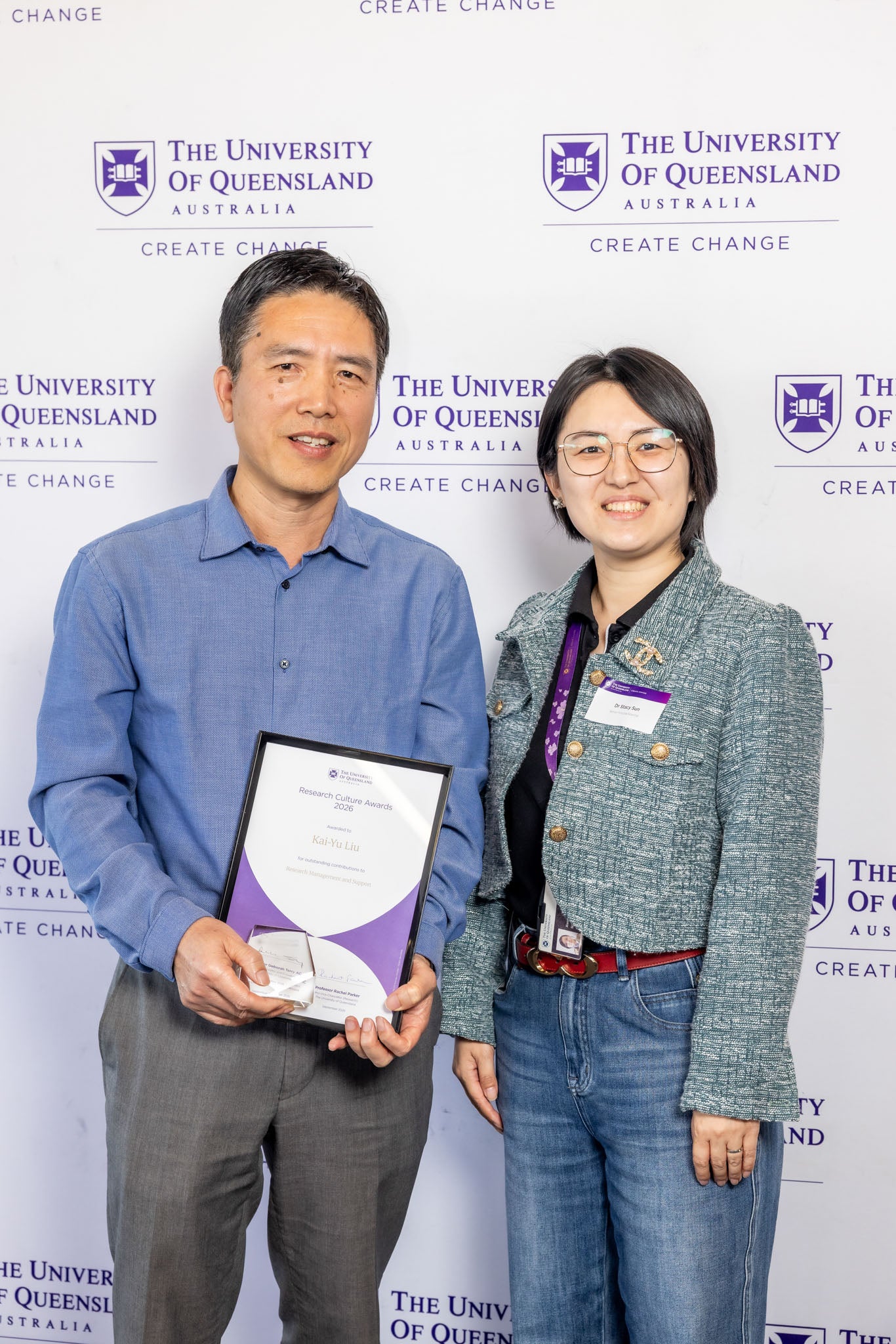
Kai-Yu Liu is highly respected within both the ANFF QLD team and the UQ community, particularly by researchers working in the fields of biosensors, BioMEMS, material growth and advanced quantum technologies. His depth of expertise in project management and advanced fabrication processes has been instrumental in enabling countless researchers to overcome complex challenges, and his sustained commitment, technical excellence and collaborative problem-solving has improved facility use, accelerated experiments and fostered innovation.
Researcher Development and Training
Sport Coaching Research Special Interest Group School of Human Movement and Nutrition Sciences
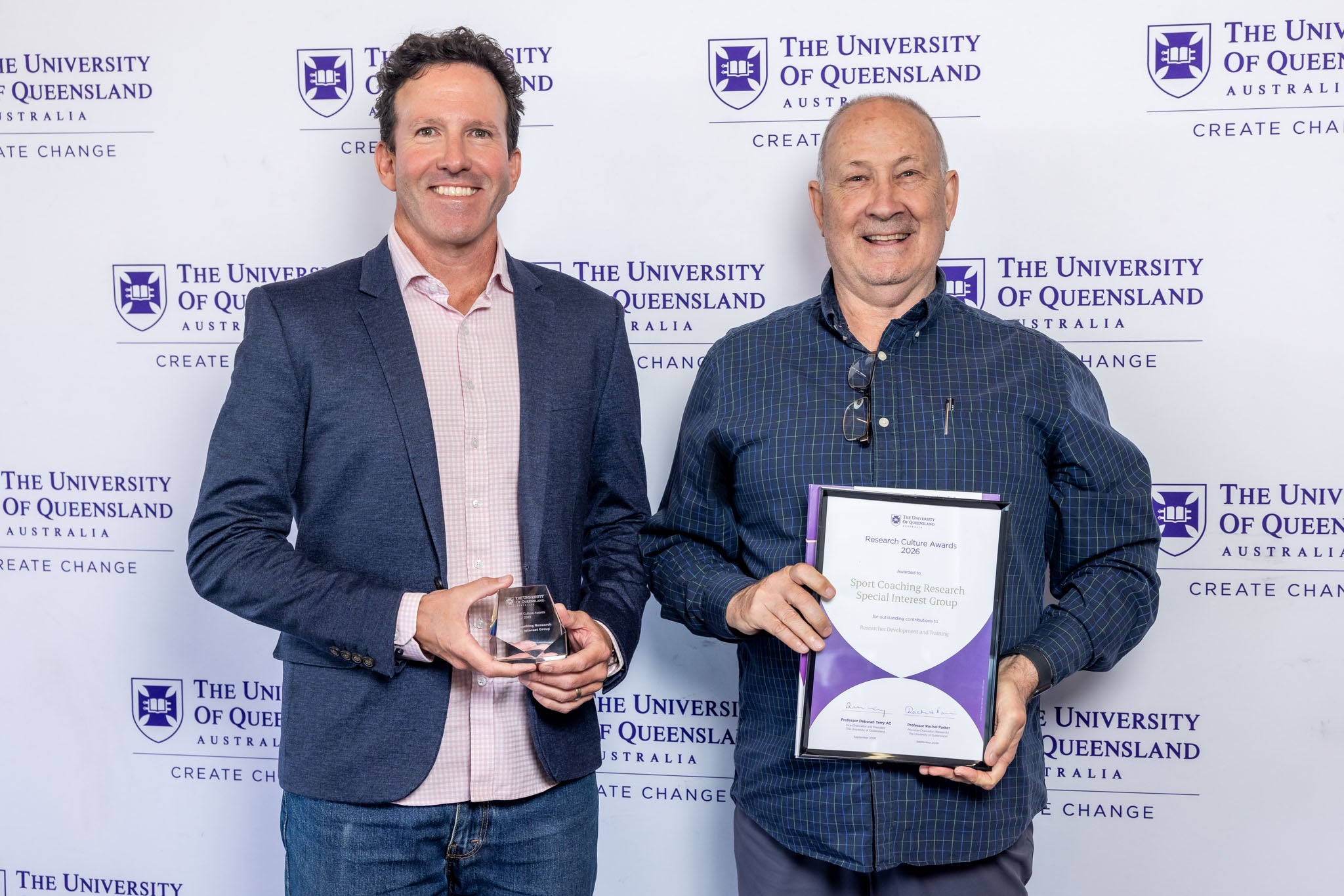
The Sport Coaching Research SIG provides an inclusive, interdisciplinary and highly collaborative researcher development community for HDRs, coursework students, ECRs, visiting scholars and industry professionals. As a weekly, voluntary community of practice, the SIG provides sustained networking and research support in a non-hierarchical environment. fostering personal and professional belonging, building confidence, critical thinking and research capability and influencing research training practices both within and beyond UQ.
Staff Development Committee TC Beirne School of Law
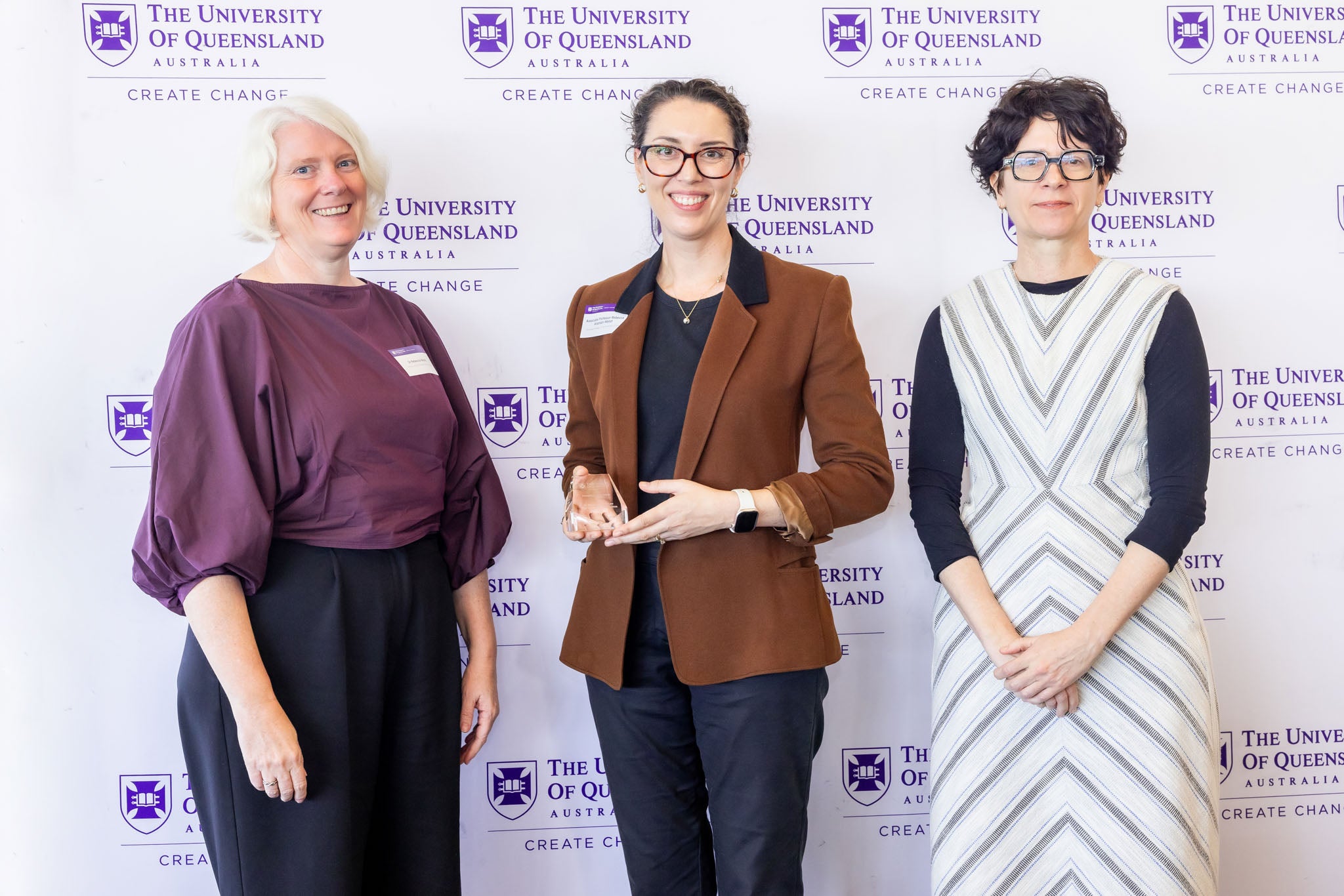
The Staff Development Committee has established a highly successful professional development program within the Law School, creating opportunities for mentoring, furthering a wide range of research skills and creating multiple opportunities for research-driven engagement. The Committee's work has taken a ground-up, people-focused approach to leadership, thus building a strong research-minded community of scholars and exemplifying the UQ values of excellence and creativity.
Responsible Research Practices
Human Studies Unit (HSU) Institute for Molecular Bioscience
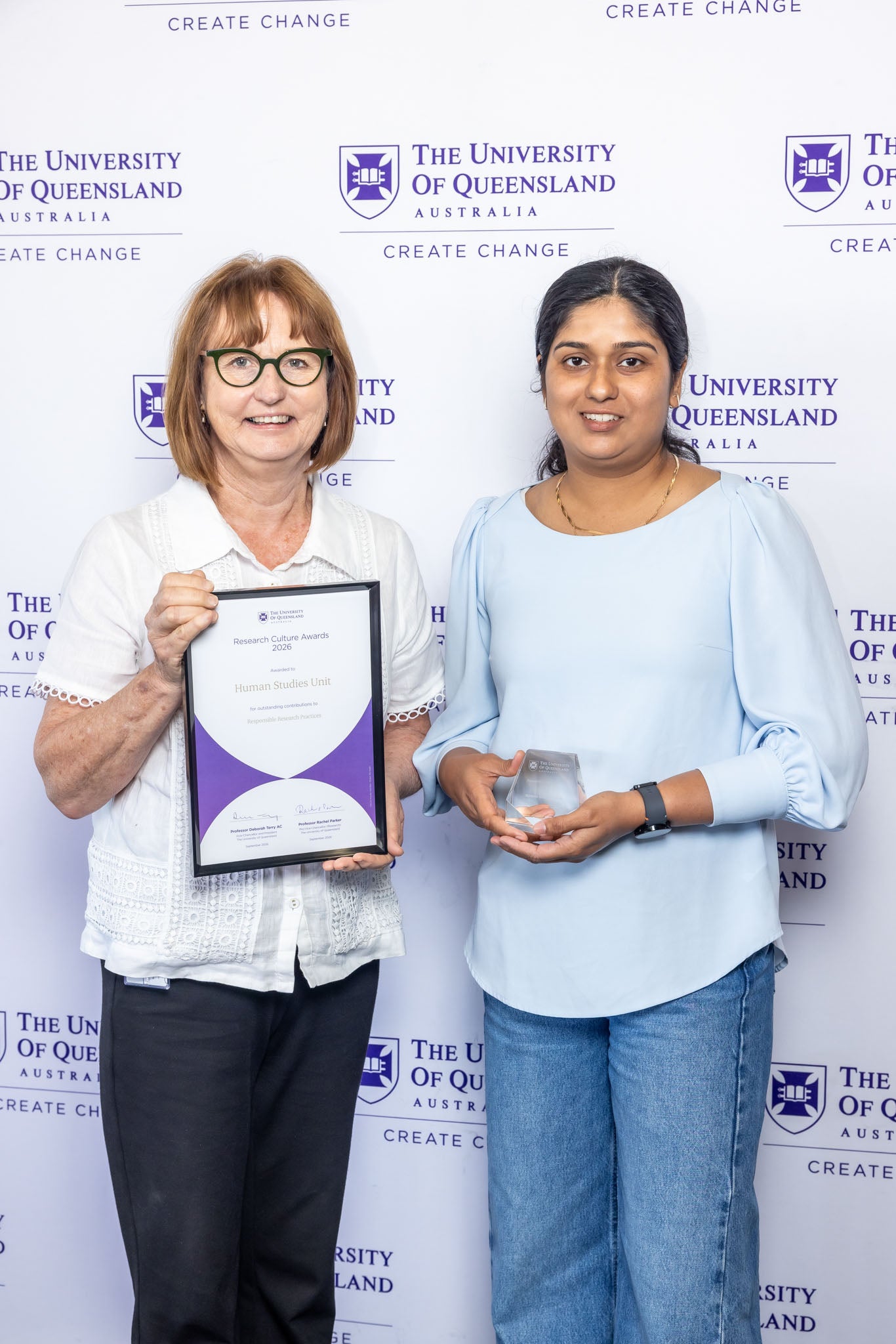
The HSU embeds high standards of ethical, transparent and reproducible human research practices, fostering trust and integrity in UQ's research culture. It provides integrated governance, laboratory and data infrastructure to support complex genomic studies, ensuring compliance with national and international regulations. By developing end-to-end systems for study design, participant engagement, data capture and sample management, HSU enables responsible, high-quality research at scale.
Language Data Commons of Australia (LDaCA) School of Languages and Cultures
LDaCA advances responsible language research through open, low-cost national infrastructure for transparent, reproducible and community-controlled data sharing. Its portals, open-source tools, tutorials and LADAL courses support reproducible workflows, while Indigenous Data Governance principles and “CAREful FAIRness” protocols embed ethical stewardship across the research lifecycle. The initiative strengthens respectful access, sustainable practice and community-centred language data governance.
Enquiries
Email: pvcr.admin@uq.edu.au